
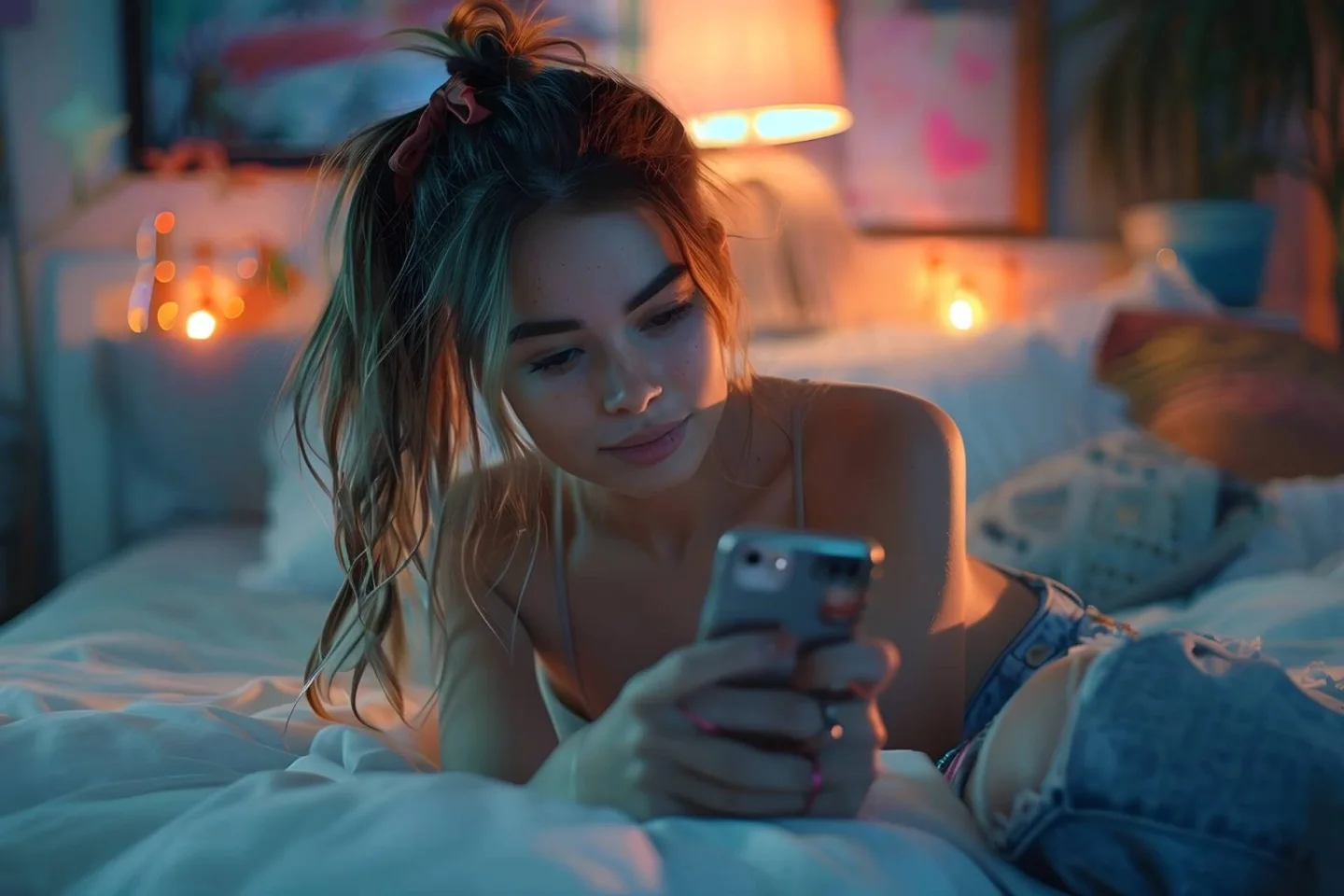
Put a light in front of you first
Start by facing a window or placing a lamp near the front of your setup. A bright window directly behind you can make your face harder to see. Change your seat or the camera direction before turning every light in the room on.
Look at the image on your device rather than judging the room by eye. A room that feels comfortable in person can look uneven through a camera. Move one thing at a time so you can tell which adjustment helped.
Choose the simplest arrangement for your room
| Situation | Try this | Check afterward |
|---|---|---|
| Daylight | Face a window with indirect light. | Does your face stay visible when clouds move? |
| Evening | Place a lamp near the camera, slightly to one side. | Is one side of your face much darker? |
| Glasses | Move the light a little higher or farther to the side. | Can you see your eyes without a bright reflection? |
| Strong backlight | Turn toward the main light or close the blind partway. | Has the background become less distracting? |
Use the table as a sequence of experiments rather than a strict formula. Room size, wall color, camera behavior and your sitting position can change the result. A small move may be enough.
Soften harsh light without improvising unsafe covers
Direct sunlight or a bare bright lamp can create sharp shadows and make you squint. Try indirect daylight, a lampshade designed for the lamp or light reflected from a pale wall. Keep the light comfortable to look toward for the length of a conversation.
Do not drape fabric or paper over a bulb or cover ventilation. Repositioning an existing light is a better first experiment than modifying it. If you use an adjustable lamp, move it gradually and look at the preview between adjustments.
Balance the background and the camera position
Your face should be easy to notice without the background becoming the main subject. Turn off a distracting screen behind you or move away from a bright doorway. Keep personal documents and identifiable details outside the frame while you adjust the shot.
Put the camera roughly around eye level and choose a distance that feels conversational. Lighting cannot fix an uncovered camera pointed at the ceiling or a dirty lens. Check those basics before deciding that you need a different light.
Use this final check before a call
- Can you see your eyes and facial expression clearly?
- Is the light comfortable rather than dazzling?
- Are reflections on glasses manageable?
- Does the background avoid private information?
- Will the setup remain usable if daylight changes?
If the image is still poor, compare it with the camera’s own preview when no call is running. A clear local preview with a poor live call may point you toward connection or performance checks instead of more lighting changes. Use the freezing guide below if the problem is motion or interruptions rather than brightness.